

As the global pursuit of the dual carbon goals gathers pace, green and low-carbon development has become a core driver for enterprises to pursue high-quality growth.
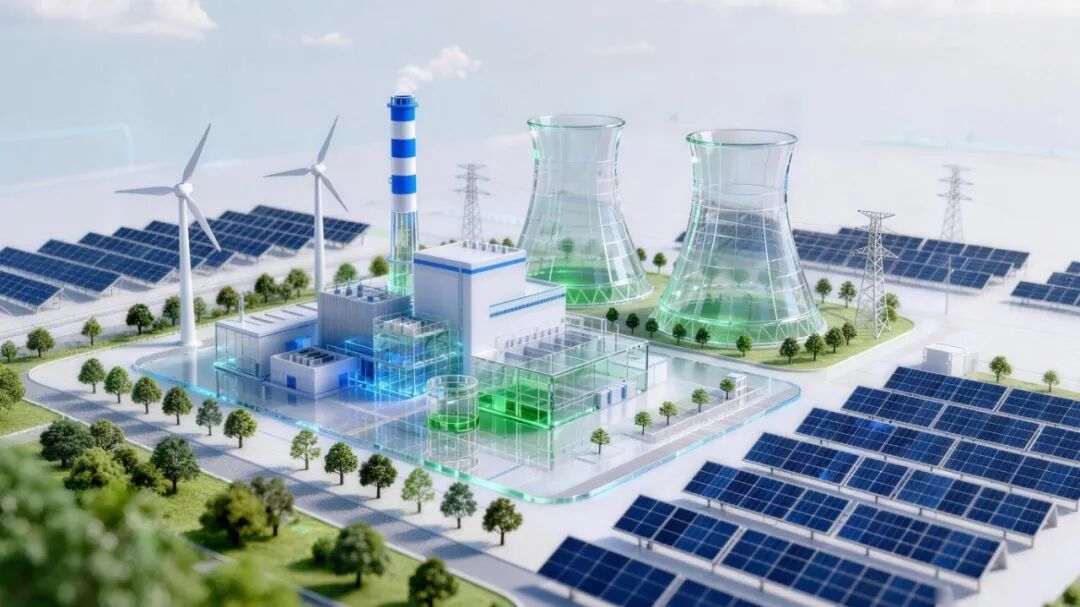
A leading player in the energy storage sector, Narada Power has long been deeply engaged in the green and low-carbon industry. From establishing a carbon footprint management system and building a full-industry chain for circular development, to cutting carbon emissions through technological innovation and practicing green manufacturing, the company has consistently set benchmarks for sustainable development across the industry.
Carbon Footprint Planning: Aligning with Global Trends to Consolidate Green Foundations
Globally, regulation on product carbon footprints is being tightened. The European Union plans to impose carbon tariffs on imported products such as steel, aluminum and fertilizers starting from 2026 based on their carbon content.
Domestically, guided by the dual carbon goals, multiple government authorities including the National Development and Reform Commission, the Ministry of Ecology and Environment and the State Administration for Market Regulation have rolled out a string of policies to accelerate the development of the product carbon footprint management system. It is specified that a preliminary carbon footprint management system will be established by 2027, and the system will be fully improved and applied in more scenarios by 2030. Lithium-ion batteries, categorized as one of China's "new three major exports", have been designated as a key area for the formulation of carbon footprint standards and certification.
Driven by policies and market demands at home and abroad, Narada Power has taken the lead in advancing carbon footprint initiatives as a core priority for its low-carbon transition.
Since 2009, the company has released corporate social responsibility reports for 16 consecutive years and publicly disclosed greenhouse gas inventory results for 14 consecutive years, pioneering a comprehensive carbon information disclosure system covering all business operations.
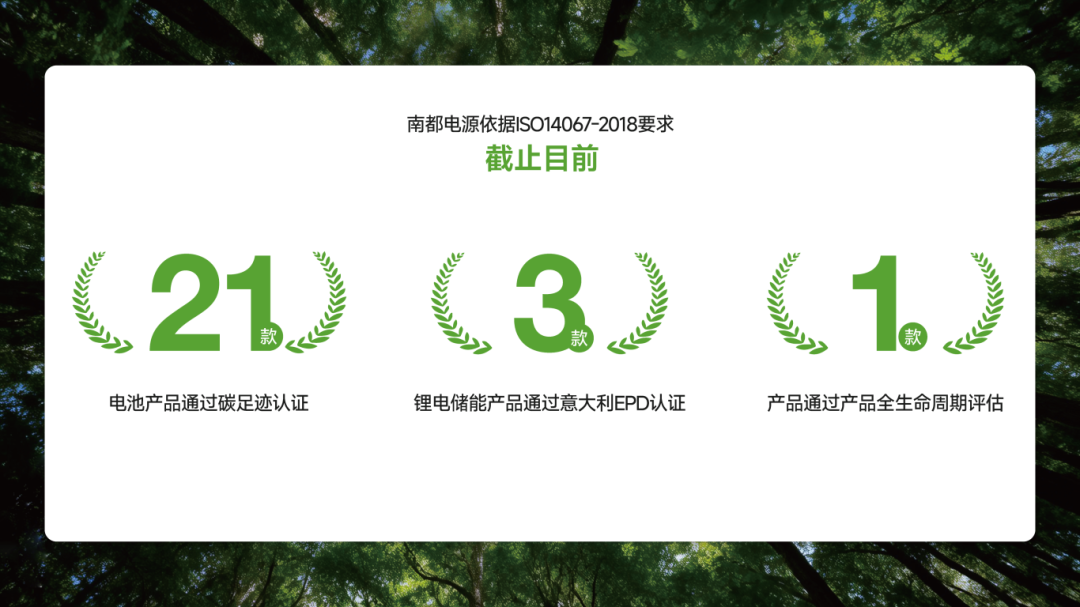
By the end of 2025, in compliance with the ISO 14067 standard, the company had completed carbon footprint certification for 21 product models. Three of its lithium energy storage products obtained the EPD certification issued by Italy, and one product passed the full life cycle assessment. These certifications cover multiple assessment scopes including "cradle-to-grave" and "cradle-to-gate", providing practical references for carbon footprint accounting in the industry.
Full-chain Green Management: Building a Moat for Low-carbon Development
In terms of green and low-carbon management systems, Narada Power has achieved integrated coverage of multiple international standards. All nine subsidiaries of Narada Power have obtained certifications for nine major authoritative international management systems, including ISO 50001 (Energy Management System), ISO 14001 (Environmental Management System), ISO 14064 (Greenhouse Gas Management System) and ISO 14067 (Product Carbon Footprint). This has formed an integrated management framework spanning energy utilization, environmental protection, greenhouse gas control and product carbon footprint, laying a standardized foundation for green production.
At the industrial chain level, Narada Power has innovatively built a closed-loop lithium battery industrial chain. By integrating resource recycling and manufacturing processes, the company has substantially reduced carbon emissions throughout the product life cycle.
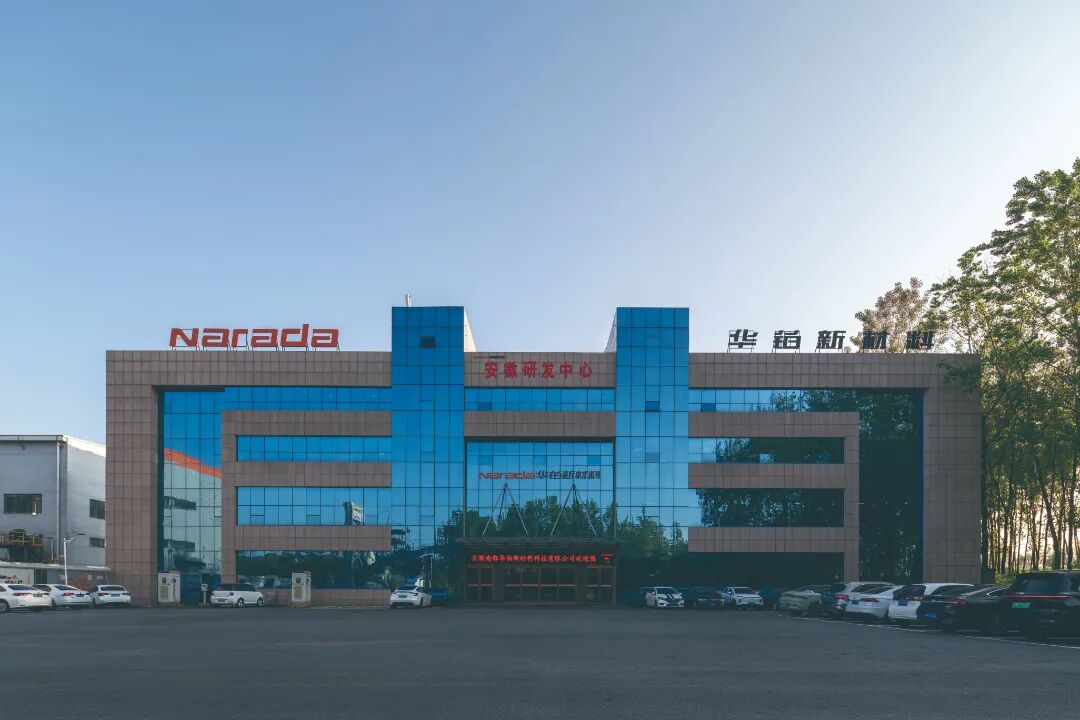
Its wholly-owned subsidiary Huabo New Materials specializes in recycling waste lithium-ion batteries. Each ton of recycled lithium battery materials saves 2.76 tons of standard coal and cuts carbon emissions by 7.18 tons.
Furthermore, Narada Power has formulated and implemented green supplier evaluation criteria. It requires key suppliers to conduct Life Cycle Assessment (LCA), and gives priority to suppliers with sound low-carbon performance, thereby driving carbon reduction across the supply chain.
Thanks to its outstanding achievements in supply chain decarbonization, the company was listed on CDP's Supplier Engagement Leaderboard 2023 with an A rating, well above the average C rating recorded globally, in Asia and across the industry.
Technology-driven Carbon Reduction: Leveraging Strength in Green Intelligent Manufacturing across Scenarios
To advance toward zero-carbon operations, the company has actively deployed rooftop photovoltaic and energy storage systems at its facilities. This initiative makes full use of new energy resources and peak-valley electricity price differentials to lower operational costs and carbon footprints.
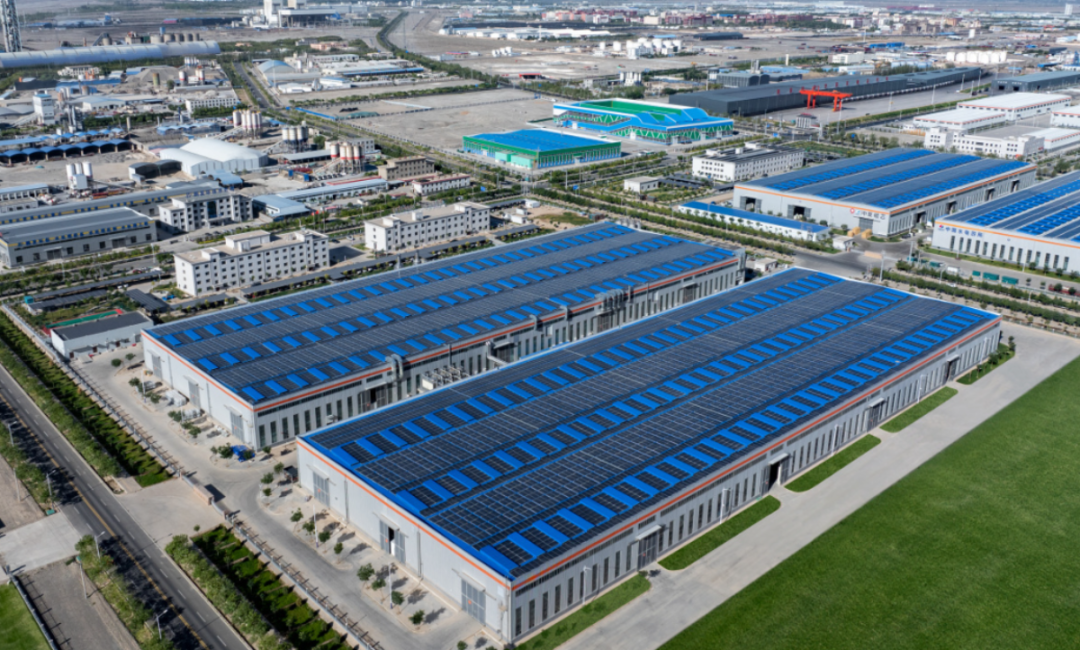
By the end of 2025, Narada Power had installed photovoltaic panels covering a total area of 279,000 square meters across six factories, with a total installed capacity of distributed power stations reaching 46.9 MW. In 2025, these facilities generated 14,811 megawatt-hours of renewable energy, equivalent to 1,820.3 tons of standard coal, accounting for 7.44% of the company's total power consumption.
Up to now, the company has delivered over 80 GWh of energy storage products. Calculations show that these products have helped clients save 22,720 tons of standard coal and reduce carbon dioxide emissions by 42,928 tons, an effect equivalent to protecting 2.346 million trees from being cut down.
To improve energy efficiency in production, the company carried out 10 technological upgrades in 2025, such as applying free cooling to cooling water systems in winter and renovating lighting systems in integrated electrical assembly areas. These projects helped save 7.907 million kWh of electricity and 18,300 tons of steam, translating to a total energy saving of 2,679 tons of standard coal.
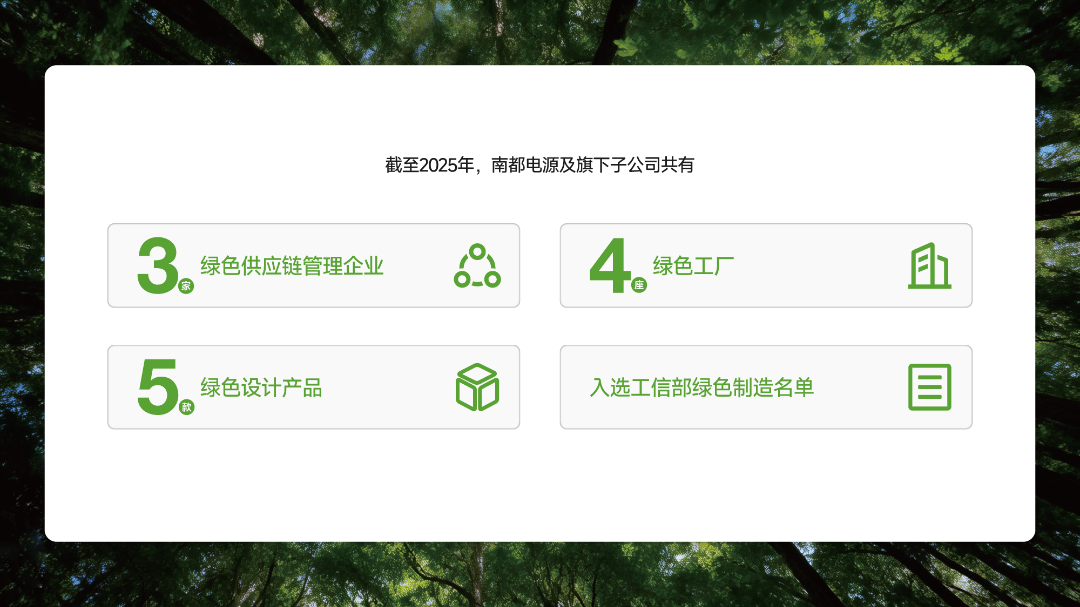
Narada Power has also yielded fruitful results in green manufacturing. As of 2025, the company and its subsidiaries include 3 enterprises recognized as National Green Supply Chain Management Enterprises, 5 National Green Factories, and 5 products selected as National Green Design Products on the green manufacturing list released by the Ministry of Industry and Information Technology.