
On November 7, 2025, Narada Power Source, in collaboration with Zhejiang University and State Grid Shandong Electric Power Company Information and Communication Company, published a latest research achievement in Journal of Energy Storage, a top international journal in the field of lithium-ion energy storage. The team proposed a novel method for early detection and localization of thermal runaway in lithium-ion batteries based on microphone array acoustic signals and AI deep learning algorithms.
By capturing the weak high-frequency abnormal acoustic signals generated by the safety valve of lithium-ion batteries before thermal runaway, and adopting a new time-series deep learning algorithm, the system achieves an early warning of thermal runaway 791 seconds in advance and features centimeter-level precision sound source localization, providing a brand-new technical path for the safety monitoring of energy storage power stations.
With the rapid development of new energy power grids and energy storage technologies, the safety issue of lithium-ion batteries in large-scale energy storage systems has become increasingly prominent. Thermal runaway is one of the most dangerous failure modes during battery operation, often accompanied by high temperatures, fires, and even explosions, posing a serious threat to the safety of power stations and personnel.
Traditional monitoring methods mostly rely on temperature, voltage, current, or gas detection. However, changes in these parameters usually occur in the middle and late stages of thermal runaway, making it difficult to achieve early warning in a timely manner.
Driven by the application requirements of State Grid Shandong Electric Power Company Information and Communication Company in the field of energy storage batteries, Narada Power Source has developed a 314Ah lithium-ion energy storage battery and jointly developed an intelligent early warning system for lithium-ion thermal runaway with Zhejiang University.
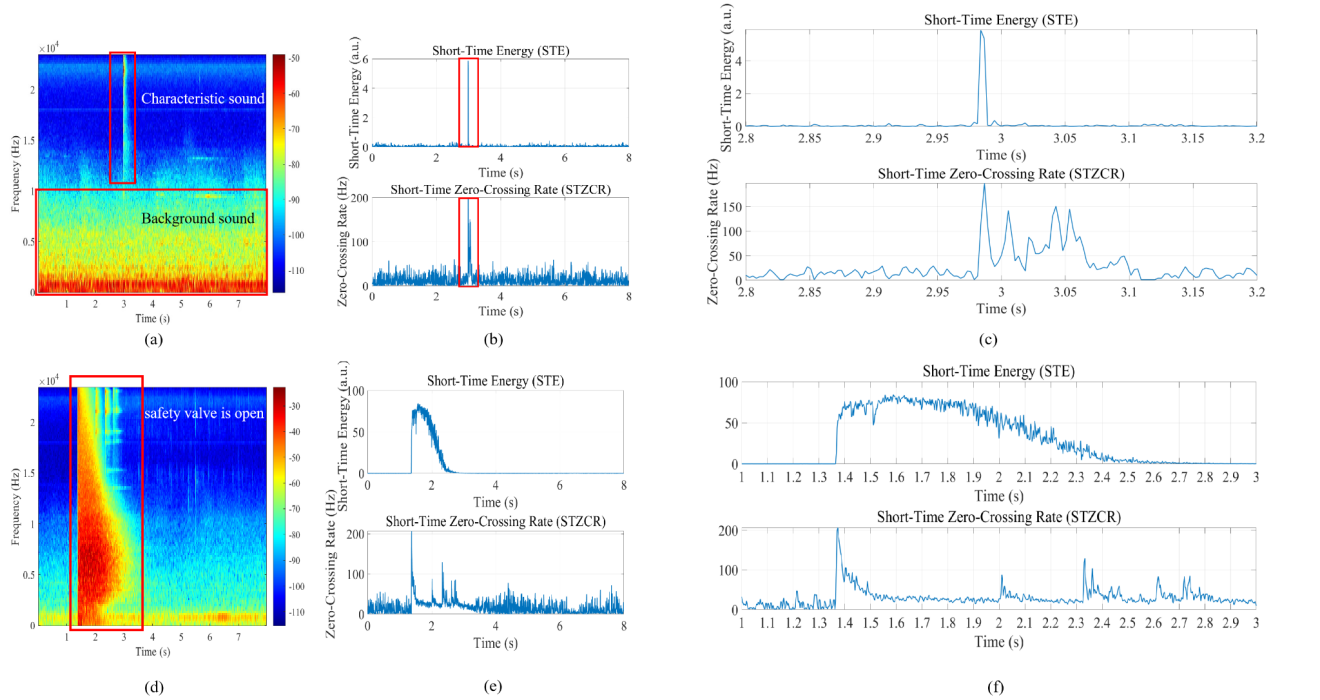
In experimental research, the team found that in the early stage of thermal runaway, the top safety valve of the battery vibrates slightly due to the rise of internal pressure, thereby generating abnormal high-frequency sounds with a frequency higher than 10 kHz.
These acoustic signals, generated by the pressure on the safety valve, record the pressure disturbance information in the initial stage of thermochemical reactions. Based on this, the R&D team proposed an early acoustic precursor detection mechanism for thermal runaway, realizing the advanced identification of thermal runaway.
In the system design, the research team constructed an array composed of four high-sensitivity microphones, arranged at the four corners of the battery pack. The system can capture weak high-frequency acoustic signals. Each signal is input into the deep learning recognition module after front-end filtering and amplification.
The algorithm adopts a bidirectional gated recurrent unit neural network, combined with acoustic features, to automatically identify acoustic segments with abnormal sound characteristics of the safety valve in the early stage of thermal runaway.
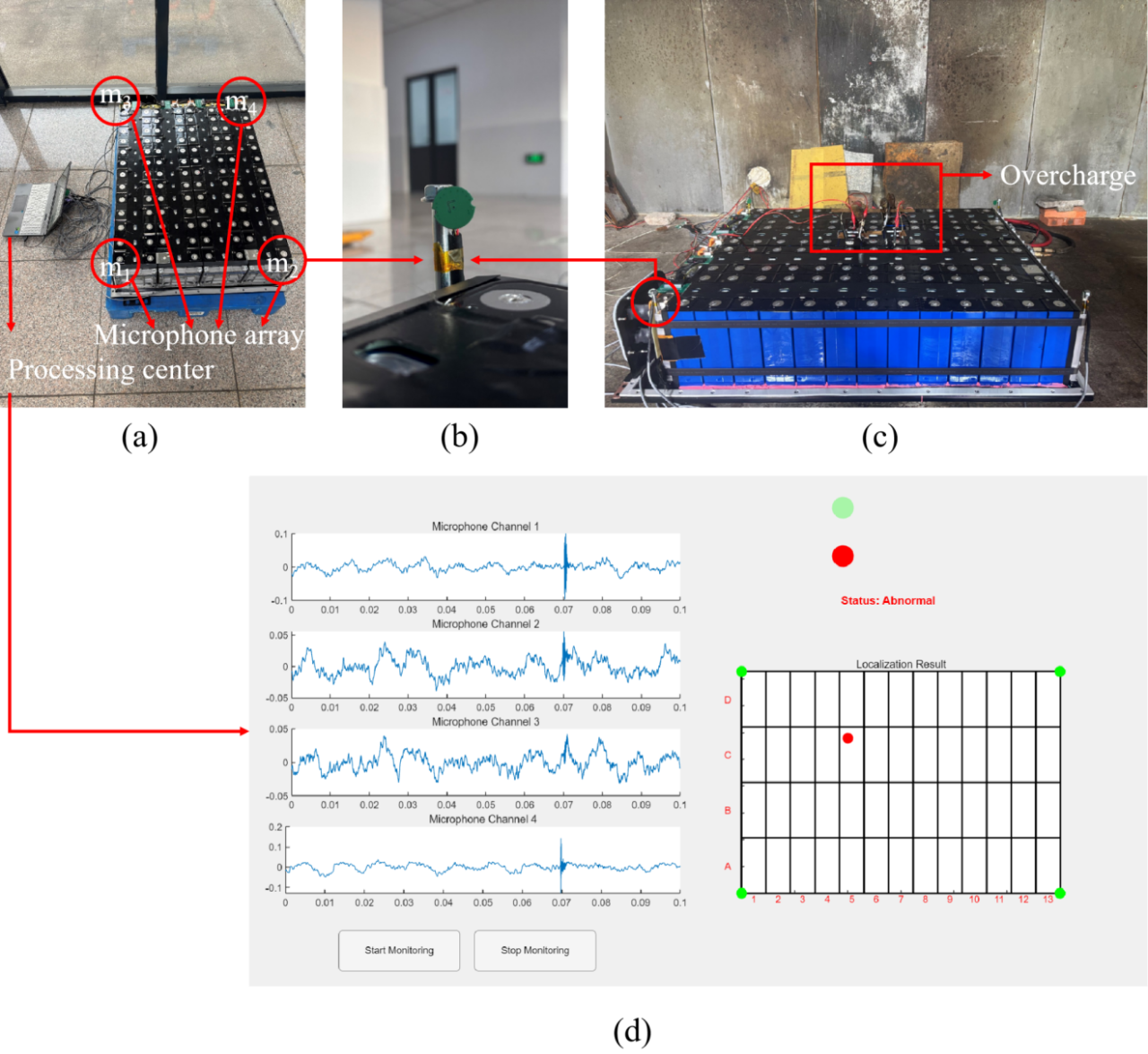
To further determine the source location of abnormal sounds, the team achieved spatial localization of sound sources by analyzing the time differences of multi-channel acoustic signals and combining with a geometric triangular positioning model. The algorithm remains highly stable under low signal-to-noise ratio conditions and can accurately locate within 5 centimeters in complex battery compartment environments.
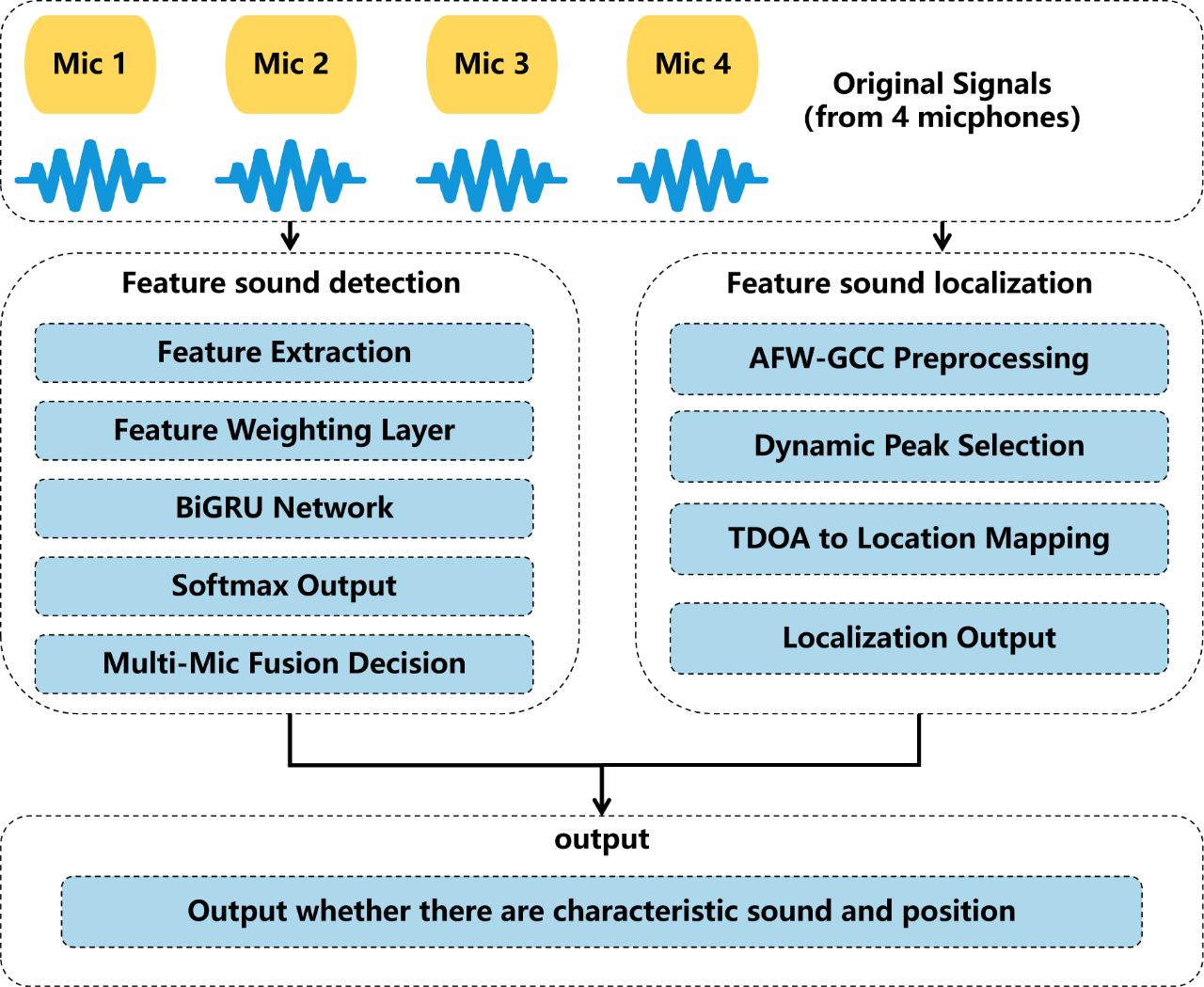
In experimental verification, the research team built a controllable heating environment, induced the thermal runaway process of single cells, and collected acoustic, thermal, and electrical data simultaneously.
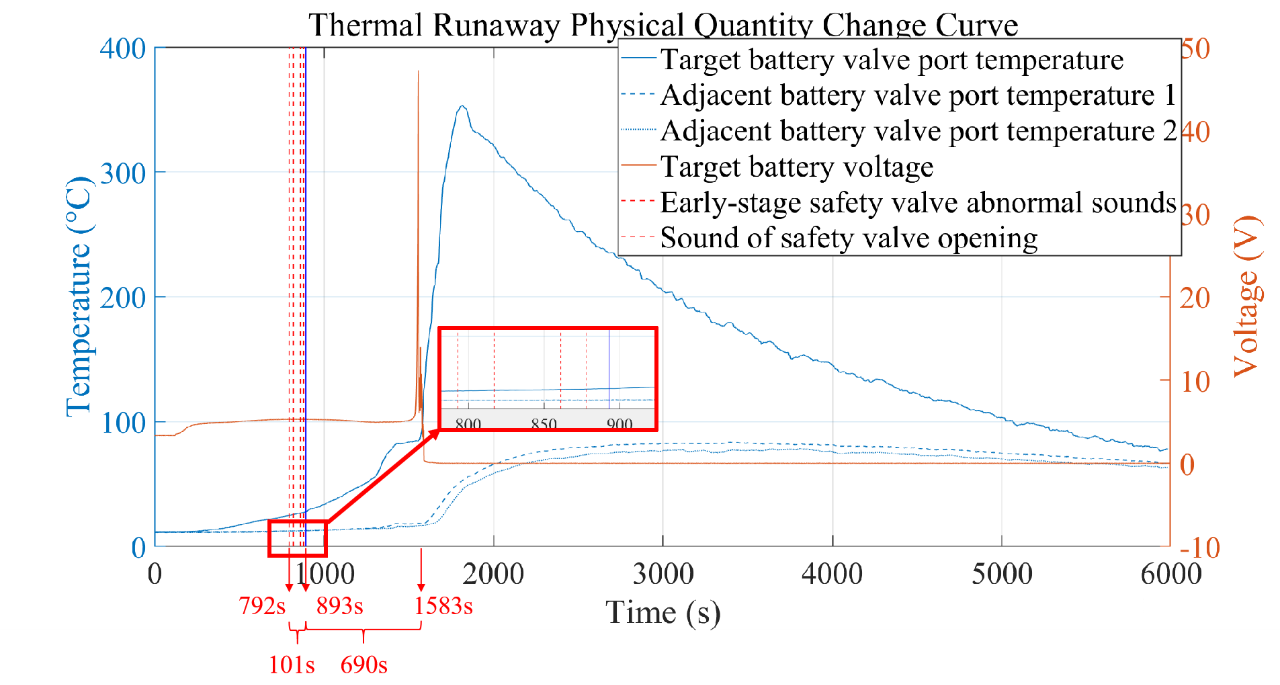
The experimental results show that the acoustic early warning system can identify early abnormal signals 101 seconds before the safety valve opens and issue a reliable warning 791 seconds before the outbreak of thermal runaway, with a detection accuracy rate of over 90%, significantly leading traditional sensing prediction methods.