

 The global energy storage market has experienced explosive growth in recent years, bringing thermal management failure, a critical safety factor, into the spotlight. Thermal simulation serves as an effective solution to guarantee fully controllable safety of energy storage systems under all operating conditions.
Early thermal safety design of energy storage systems mainly relied on physical tests and engineering experience. Conventional thermal runaway tests incur extremely high costs, require lengthy cycles, and fail to accurately quantify and visualize the whole process of thermal runaway and its propagation. Moreover, they cannot cover all possible operating scenarios.
Against the trend of larger-capacity batteries and higher specific energy systems, traditional methods can no longer meet practical demands.
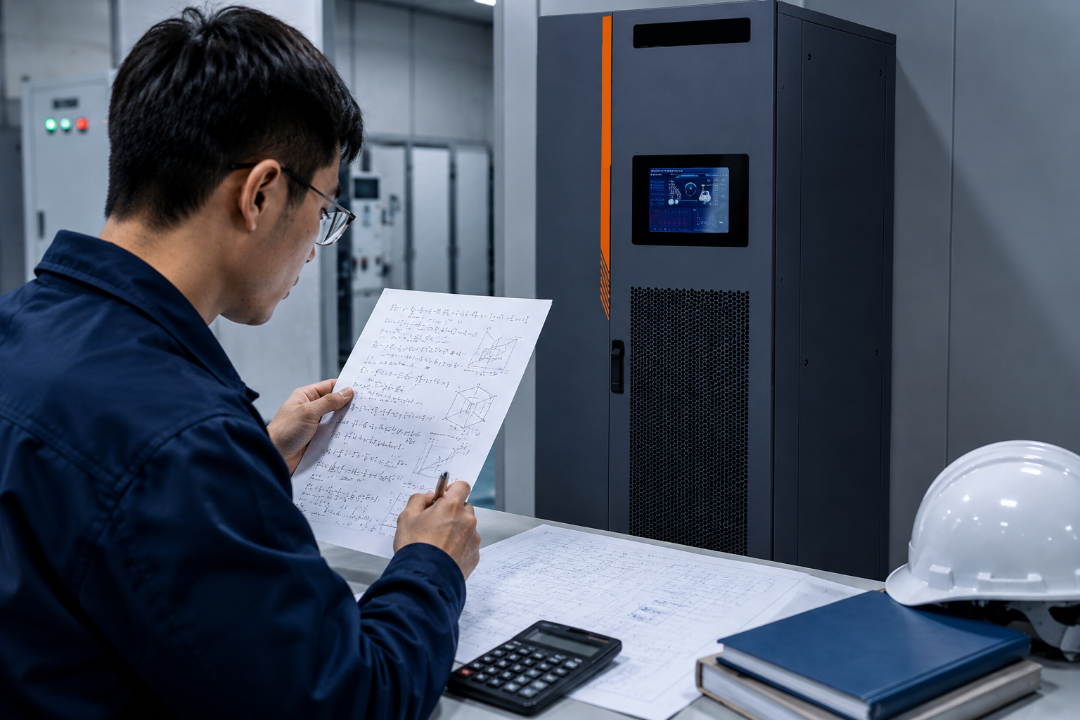
To address this challenge, Narada has built a multi-layer high-fidelity multi-physics coupled simulation model covering cells, battery packs and full energy storage systems based on multidisciplinary mechanisms including electrochemistry, heat transfer and fluid mechanics.
This model can precisely simulate heat release and temperature rise curves during cell thermal runaway, heat transfer to adjacent cells and structural components, generation and diffusion paths of high-temperature flue gas, as well as the cascading triggering and spreading process of thermal runaway.
Such thermal safety digital twin technology can accurately reproduce real thermal runaway processes in a digital virtual space, delivering precise digital tools to improve the thermal safety of energy storage systems.
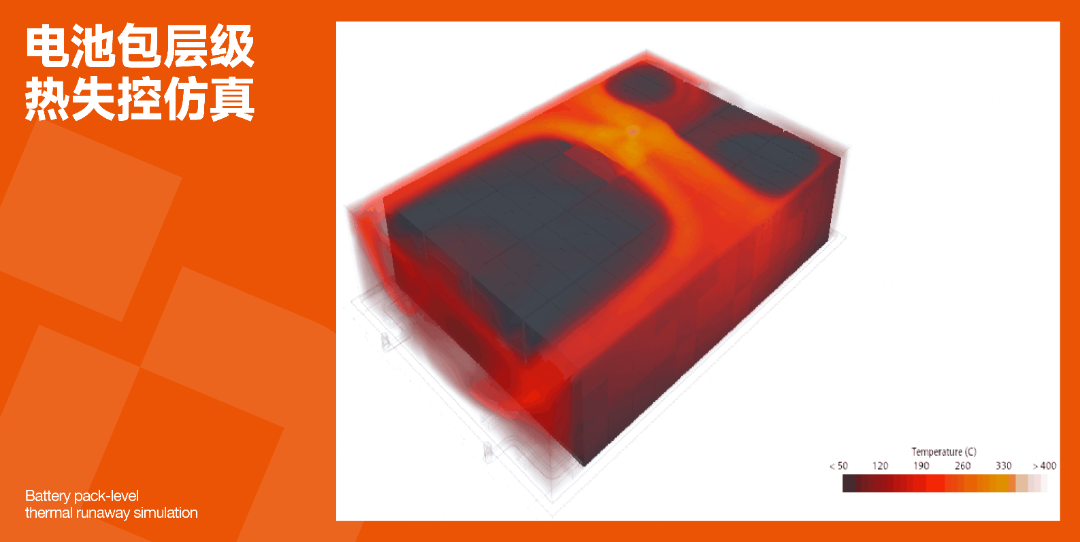
Equipped with this technology, R&D engineers can dynamically deduce the sequence and paths of thermal runaway propagation inside modules and battery clusters in a virtual environment, identify weak links in thermal safety design in advance, develop more rational pressure relief and flow guiding channels, and optimize the layout and material selection of thermal runaway propagation barriers with higher precision.
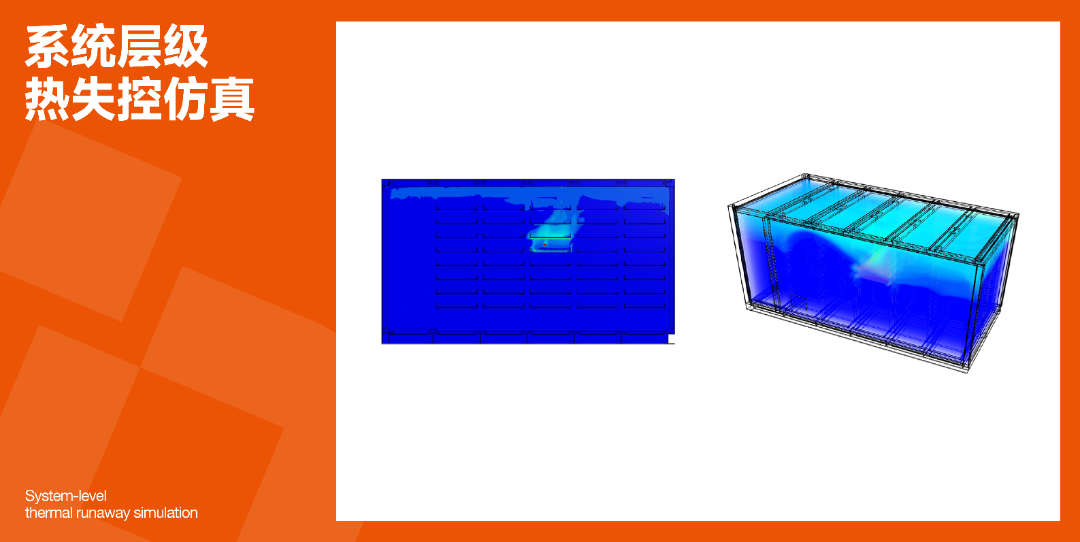
In addition, thermal runaway prediction results can support the formulation of early warning and fire suppression strategies. For instance, they help determine optimal installation positions and alarm thresholds for temperature and gas sensors, and plan the effective operation window for fire extinguishing agent spraying, driving fire protection strategies to shift from passive fire suppression to active inhibition.